Saturday, 19 March 2011

Halftime. From Success to Significance in Second Half

This afternoon, there were Halftime (Confirmed, for 6 months at least), Halftime (Most Likely) & his Fulltime Homemaker-Wife, 2nd Half (6-year old), 2nd Half (1-year plus), First Half (Quite Permanently So) whose mother's funeral wake was the chief reason for us to gather once again.   All of us were in our late forties and were either at this time of transition (as Bob Buford said in his first book, Halftime) or had already successfully transited to the 2nd half of the game of our lives.

I quickly googled about this book, highly recommended by a Life Coach that Halftime (Most Likely) met recently. 

In his book, Bob asserted that, "Halftime is an important time of transition - the time when a man moves beyond the first half of the game of life.  It's halftime, a time of revitalisation and for catching a new vision for living the second half, the half where life can be lived at its most rewarding...it's a time of personal renaissance; not necessarily one of crisis but it can be a catalyst [that] propel you...from mere success to true significance".

Bob further asserted that the old model of arduous career followed by relaxing retirement should be jettisoned, replaced by the idea that the second half can—and should—be more creative, more impactful, more meaningful, more adventurous, filled with more learning and contribution than the first half.  A successful first fifty years should be viewed as nothing more than a good start."

Jim Collins, in his Foreword for the book, wrote about two approaches to self-renewal (as proposed by John Gardner, former Secretary of Health, Education & Welfare and author of the classic, Self-Renewal):
  1. Repotting ourselves into entirely new activities, changing our activities from career to contribution
  2. Repotting ourselves in our primary activity - the same one pursued for our first half, i e choosing to renew within a chosen genre or field
Gardner had advised that we should start thinking about “repotting” ourselves every 10 to 15 years, throwing ourselves into challenges that extract hidden strengths.

I am so glad to have taken this 6-month leave of absence, to repot and hopefully, to rev up a new compelling game plan for the 2nd half of my game of life, at least for the next 10 years as a start.
  

Make Interesting Happen

Saw a full-page advertisement by BMW in Straits Times today. 

Thought I should attempt my own version of it:

"Make friends via a new HOBBY.  Or an Interest Group.  Make a TRIP to a place I have never heard of.  Make it as I go along. Make a DAY last longer.  Make TODAY happening.  Make time to DREAM.  Make an old fear disappear.  Make a trip BACK IN TIME. Make it as I go along.  Make a WORD.  Say it aloud.  Make this the BEST 5 minutes of the day.  Make a SONG.  Sing it.  Make a new DISH.  Photograph it.  Blog it.  Make this the START of a new adventure.  Make Square Pegs for Round Holes.  Make a RAINBOW.  Make a FUNNY STORY.  Animate it.  Share it.  Make a lip-smacking DESSERT.  Or a mouth-watering CHEESECAKE. Or a heart-warming fluffy BREAD.  Make a commitment to a WORTHY CAUSE.  Make a new TRAIL. Make someone LAUGH.  Make his/her DAY. Make new DISCOVERIES.

Make Ordinary EXTRAORDINARY!

Make Ordinary Extraordinary!

Wednesday, 16 March 2011

The Japan Quake, Tsunami & Nuclear Crisis 2011

I went through extensive lengths and efforts to draw up an itinerary to US which I thought was perfect in terms of price, timing and transit stops and guess what?  These efforts and plans came to a nought as a result of a freak devastating earthquake and nuclear crisis in Japan last Friday.

As a result, my travel plans to Orlando have to be hastily changed.  The dates of travel now need to be changed.  Hotels to be re-booked.  Longer waiting time at the first transit with hardly enough time to pick up luggage for the connecting flight from Newark to Orlando.

However, instead of griping and groaning, I should learn from the stoic and calm attitude of the Japanese.  Take all these disruptions in my stride and learn to appreciate that these pale by comparison to the crises and tragedies that have unfolded throughout Japan.  Also, perhaps it's time to learn how to respond to unplanned situations and still maintain a positive and optimistic attitude.  After all, this is supposed to be a vacation, to be enjoyed and savoured.  I should learn to take the travelling time as part of the vacation and enjoy the journey.

I can only pray for God's grace and mercy to shine upon this land and stop the nuclear crisis from worsening.  My sincere prayers that there will not be another major quake to throw the country into further disarray.

Friday, 11 March 2011

The Tuition Industry in Singapore

Yesterday I had lunch with an old friend and wife.  The objective was to brainstorm on the idea of a tuition start-up that:
  • Is scalable and preferably can be extended beyond Singapore
  • Has a clear differentiating factor
  • Will clearly add value to the academic experience for the students and to the tuition industry
  • Meets parents' goal of academic excellence for their children. 
I went home to tackle the subject matter in my usual style: gather facts for a feasibility or viability study.  I was totally honest with my friend - at this point, I may not have enough funding nor motivation to want to start a business venture.  I need to be convinced of what is required of me if I should plunge ahead with the idea.  He agreed that it's only worth going into it if we can achieve the abovementioned objectives.

I googled the tuition industry and quickly discovered the following:
  1. The tuition industry seems highly saturated - with a few hundreds of tuition centres, mostly established in the last 20 years or so, and an annual turnover of hundreds of million versus a potential market of less than 200 secondary schools and 20 JCs.
  2. This is an unregulated industry with no minimum standards to govern the setting up of the agencies and qualifications of the tutors. MOE nor the Private Education Council are involved in regulating these centres; neither is SEAB involved in any form of accreditation.  There is also a lack of a tuition association or sort (unlike Australia) which provides benchmarks and minimum standards for all registered tuition agencies and tutors in Singapore.
  3. There are rising concerns over issues such as child protection, consumer protection, truth in advertising, etc yet with no apparent solutions.
  4. There are few Singapore Tuition portals or directories to provide the much needed information for approriate decision-making by time-starved parents and students.  The existing ones somehow lack a clear focus and purpose, that is whether they exist to provide unbiased reviews and resources for parents to select appropriate agencies or tutors.
  5. There seem to be a preference for either home tutoring or small group tutoring because of the close/personalised attention and customised teaching approaches that can be given to the students which are missing from the large classroom setting in the schools.
  6. There seem to be an obvious difference in consumers' requirements: from the parents, they want affordability and accessibility while the students value rapport with the tutors as a key pre-requiste.
The top qualities or factors that parents look out for in a good tuition agency or tutor are:
  • experience, track record and qualifications
  • familiarity with the syllabus
  • access to resources such as past-year exam questions
  • costs
  • location
The research threw up some questions:
  1. Should the industry ie in terms of the centers or the tutors be subject to some form of accreditation?
  2. The costs of seeking such accreditation and how they will be passed on to the consumers ie the parents and students?
  3. There may be a need for an independent association or body that provides unbiased but essential information for all parents especially those in the lower income family bracket
  4. How to help those who are most vulnerable and in need of such assistance?
  5. Where is the "blue ocean" in this highly saturated industry that seems to have founded itself already on some well-known success formulae? 
In Singapore where social mobility is an increasing concern given the widening income gap, education remains as the key to helping the lower income or socio-economically disadvantaged, then perhaps there is an important need to provide greater transparency and assistance to this community first.  How will tuition, a fee-based service, be made more accessible, affordable and available to the people who need it most?

Can, and should, I approach it from a social enterprise angle instead?

Thursday, 10 March 2011

Wetlands of Singapore

Source: ASEAN Regional Centre for Biodiversity Conservation

There are about 7 of such wetlands in Singapore, according to this source:
  1. Pulau Tekong Mangroves
  2. Serangoon Estuary
  3. Nee (Yishun) Swamp Forest
  4. Mandai Mangroves
  5. Kranji Reservoir & Estuary
  6. Sungei Buloh Ponds & Mangrove
  7. Sungei Poyan Reservoir
 World Wetlands Day
 
According to the International Year of Biodiversity (IYB) 2010 blog, 2 Feb is World Wetlands Day 2011.   2011 is also UN International Year of Forests. 

Why are Wetlands important?
"Mangroves, peatswamp forests, freshwater swamp forests are biologically diverse and help in managing our freshwater, and providing us with many other ‘services’ across the globe including vital roles in carbon storage.  They are our allies in the face of climate change. Despite their utility, they are often under threat from development, from drainage and conversion."

Sengkang Floating Wetland was opened in November 2010.  According to a GovMonitor article,  "Sengkang Floating Wetland serves more than just aesthetics. While beautifying the landscape and creating new spaces for leisure activities, the wetland’s main function is to cleanse the water in the reservoir. Wetlands are also one of the most biologically diverse ecosystems, and support a thriving community of plant and animal life."

“The wetland is home to about 18 plant species that have been carefully chosen for both their cleansing and aesthetic properties. These plants absorb nutrients and pollutants through their roots. This helps to ensure that the water in this reservoir, an important source of our water supply, stays clean the natural way.”

The Sengkang Floating Wetland is a project under PUB’s Active, Beautiful, Clean Waters (ABC Waters) Programme. Into its fourth year, the ABC Waters Programme has been transforming Singapore’s comprehensive network of drains, canals and rivers into beautiful streams, rivers and lakes and integrates our water bodies with our parks and green spaces, creating new community spaces that are clean, pleasant and bustling with life and activity. 

The latest to open is the Lorong Halus Wetland opposite the newly launched Punggol Promenade Riverside Walk (refer to my earlier posts).

While searching for more information about wetlands, I stumbled on the following interesting and useful websites:
  1. Wild Singapore Happenings 
  2. Naked Hermit Crabs
Upcoming events found on these websites include:
Now to find willing companions to join me on these expeditions!

Wednesday, 9 March 2011

Cooking from the Heart


Since last week, I have cooked three dinners already, with the fourth coming up tonight.  It's really theapeutic to be able to spend the afternoons pottering around in the kitchen - preparing ingredients, cutting up vegetables, etc.  Of course, nothing beats going to the supermarket to satisfy my retail therapy urges:)

Dishes whipped up so far (couldn't remember all):
  1. Stewed chicken with mushrooms and carrots
  2. Chinese spinach soup with minced meat
  3. Pasta cooked in 3 different styles: (1) tossed with pesto sauce, red + yellow peppers, brown mushrooms; (2) Prego portobello mushroom sauce with more portobello mushrooms thrown in; (3) Prego tomato mushroom garlic sauce
  4. Lotus root with chicken feet & prime ribs soup
  5. Stewed eggplant with minced meat, fried with belacan and dried shrimps
There is this inexplicable joy and pleasure in deciding on the dishes to cook- which involves taking special care to cater to the different preferences of each family member as well as careful selection to create a balanced meal.  Of course, I have yet to master the art of healthy cooking - with less processed stuff and preservatives and learn to rely on natural herbs and spices.

I think what gives joy and meanng is to do everything from the heart.  Approach and handle each task with the spirit of thinking of others or enjoying oneself.  Be courageous to experiment - stretch one's imagination and creativity but also exercise due diligence to do the necessary homework to study the nature of ingredients used in order to bring out the most from them.    Of course, the hard work put in to actually whip up the dishes - these can't be achieved overnight. 

These are lessons that I have also learnt from this Korean drama (Baker King, Kim Tak Gu or Bread, Love and Dreams). 

Cooking, for the family, is about:
  • Hard work
  • Thinking of Others
  • Enjoying Oneself
  • Doing it from the Heart

And those who sit down to taste the food can somehow sense the love, care and efforts that have gone into the preparation.  Food cooked this way, even though it's not of Michelin standards, is deeply appreciated and enjoyable.  Nothing more restoring to the weary like returning to a heartwarming meal after a hard long day in the office or school.

Tuesday, 8 March 2011

Lorong Halus Wetland

We can learn how PUB transforms the River into a Reservoir
Interesting angles and perspectives...
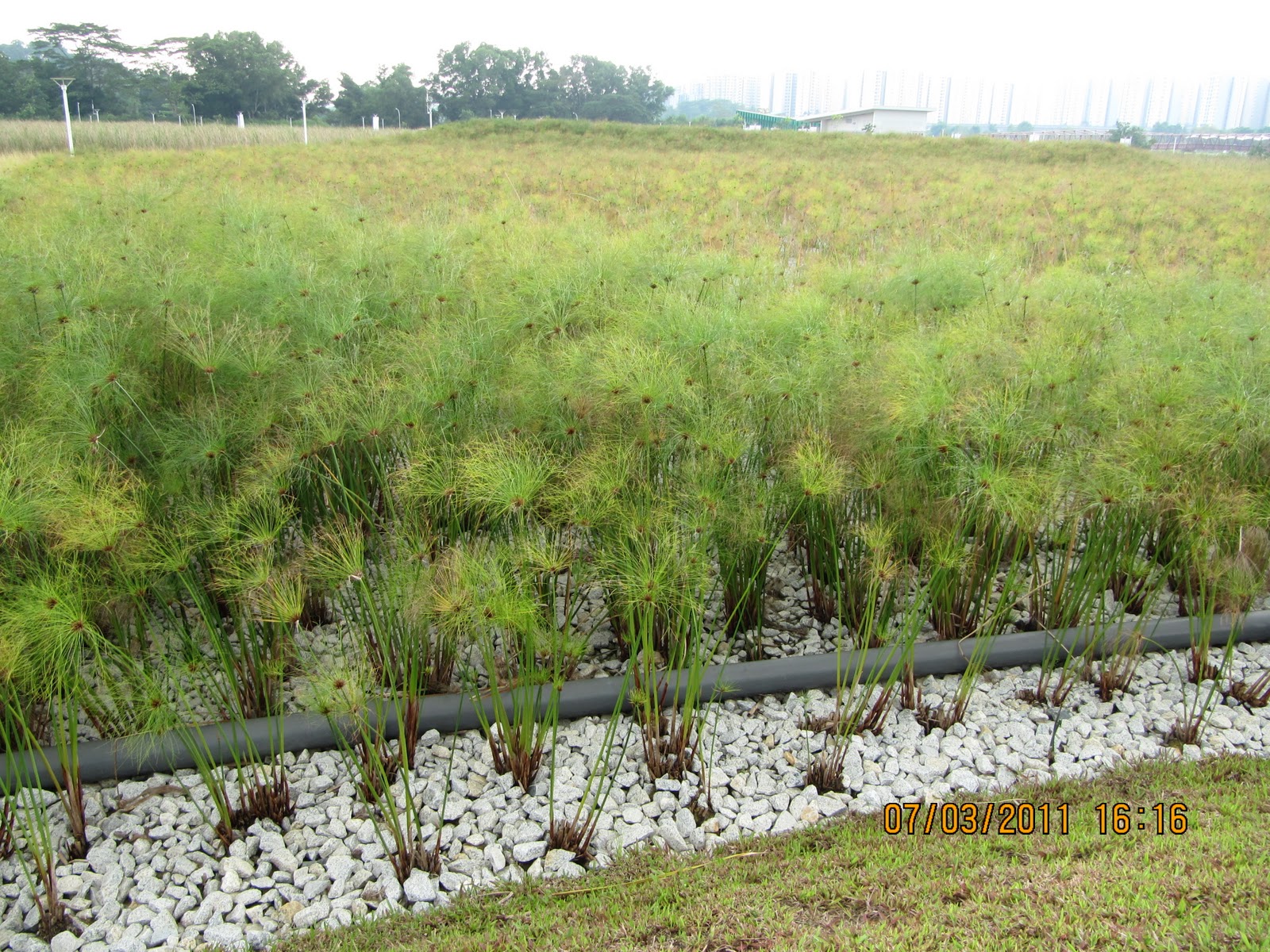
Reed Beds
This is part of the Water Treatment strategy
Wished I have better photographic skills and camera of course!
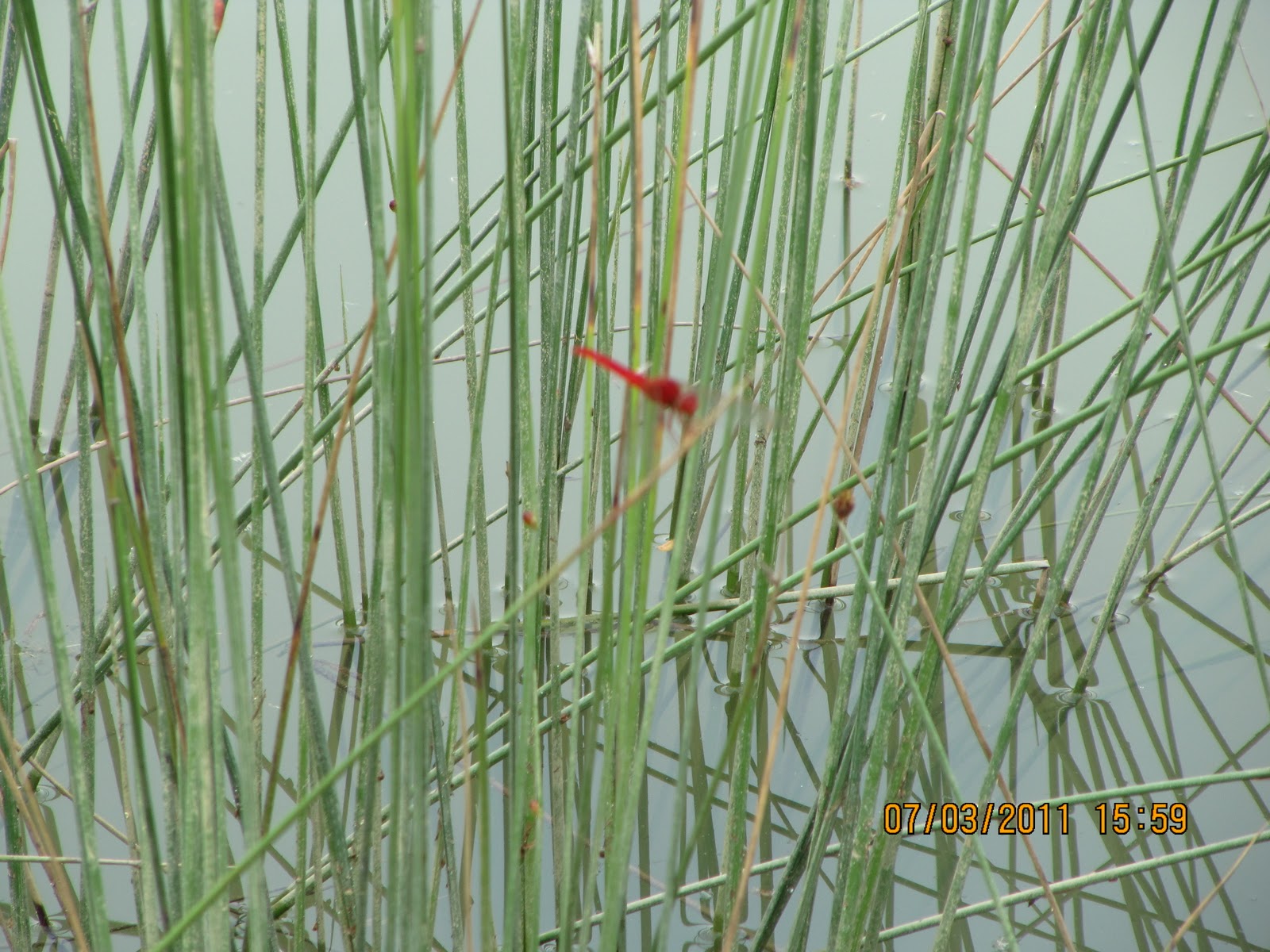
Lovely Dragonfly!